Most St. Louis houses should not have a standing seam roof, and a contractor who cannot tell you why is not a contractor you want holding a seaming machine over your living room. This page is the argument against, made as strongly as it deserves to be made.
The roof is cut up, and every cut costs you twice
The typical older St. Louis house has been added to. A back bedroom in one decade, an enclosed porch in another, a dormer at some point, a garage that grew. What that produces is a roof made of many small planes meeting at hips, valleys and wall returns, studded with plumbing vents, a turbine or two, a flue and usually a chimney with mortar that has seen better days.
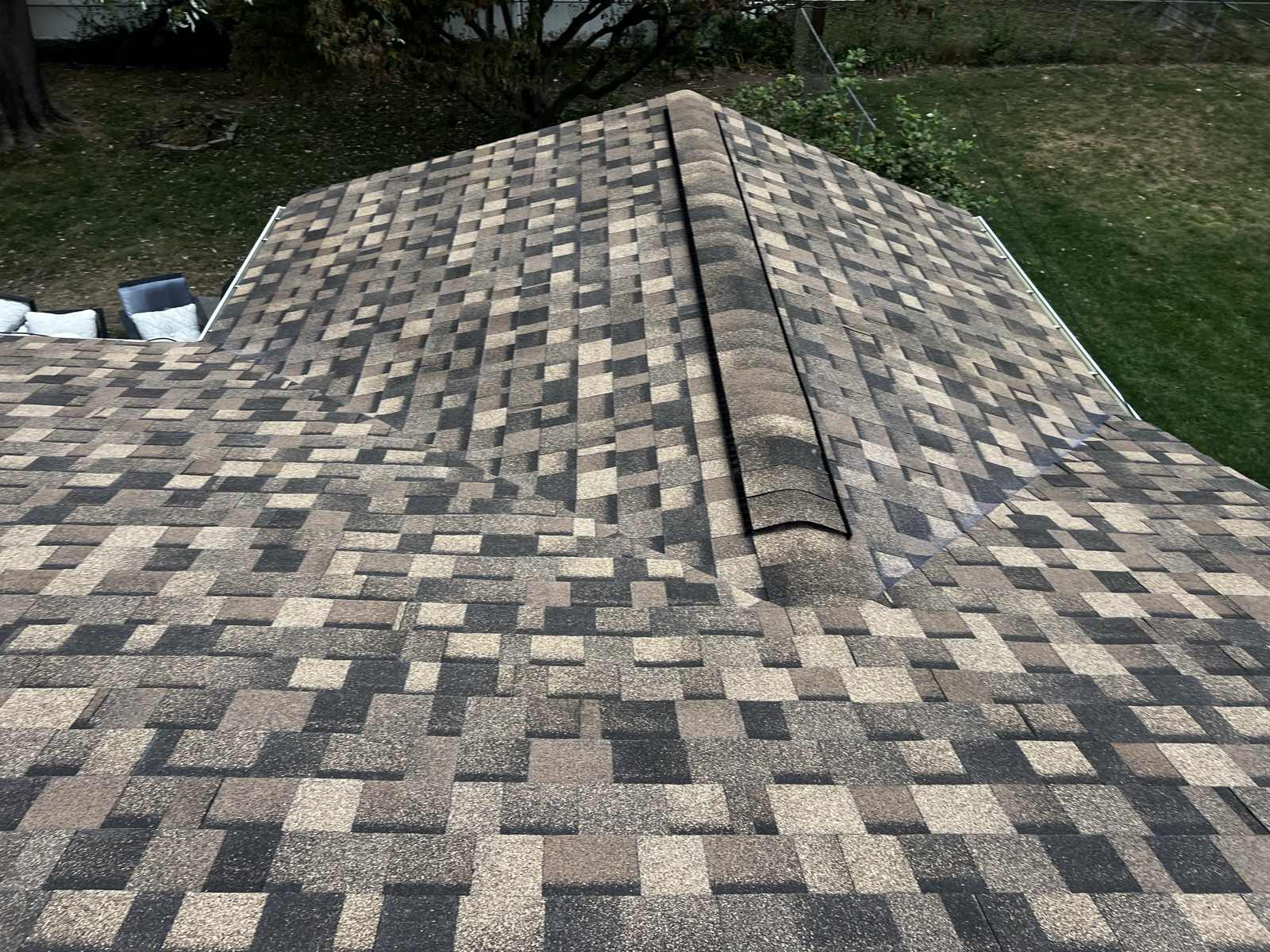
In asphalt, a hip is capped with shingles cut from the same bundles as the field. In standing seam, that hip is a fabricated flashing detail that has to be cut, folded, fitted and made watertight against two panel runs coming in at an angle. Multiply that across a roof with six planes and you have converted a fast simple job into a slow bespoke one, at metal prices, with more places for a detail to be wrong.
The rule of thumb is uncomfortable but useful: the more your roof looks interesting from the street, the worse a candidate it is for standing seam.
The deck is not flat, and metal will tell everyone
A lot of the older housing stock in the city and the inner ring suburbs is decked with wide wooden planks rather than sheet material, and after decades of load, moisture and repeated nailing those boards cup, twist and sit at slightly different heights. Asphalt shingles are small, flexible and heavily textured, and they hide all of it.
A standing seam panel is a large flat plane of metal with a specular finish. Every wave in the deck under it shows up as a shadow across the panel, most visibly in low sun. That effect is called oil canning, it is not a defect that anyone will replace the roof over, and most panel manufacturers explicitly say so in their own literature. It is a permanent cosmetic condition on a roof you bought largely because of how it looks.
It can be managed: re-decking over the planks, narrower panels, striations or stiffening ribs rolled into the panel face, thicker gauge. All of those cost money, and the first one is a whole extra trade on the job. The deck page goes through this properly.
The money is better spent somewhere else on the same house
This one gets said least often and matters most. A metal roof is a large cheque. On a lot of the houses where it gets proposed, the same money would buy a correctly installed asphalt roof with a full tear-off, proper decking repair, a real ventilation plan, new flashings, new gutters sized for the roof they are catching, and change left over for the tuckpointing that the chimney in the photograph on the previous page badly needs.
A roof is a system. Water gets in at the details far more often than through the field of the material, and moisture damage from a starved attic is not solved by a more expensive surface. If somebody is proposing standing seam without having said a word about ventilation, decking condition or where the water goes once it reaches the gutter, they are selling a product and not diagnosing a roof.
None of this is an argument that metal is bad. It is an argument that metal is specific. If your house is one of the ones with a long simple slope, or a low pitched section that has been patched to death, the case is strong. If it is a cut up frame house on a street of asphalt roofs and you are stretching to afford it, the case is weak, and the honest answer is the one nobody selling metal is paid to give you.
Why metal rarely leaks from hail, why it dents, and the exclusion to read before you spend the money.