Four things people ask about metal roofs that have nothing to do with leaks: what happens to the snow, what happens to the ice, whether the rain is loud, and what the ticking is. Three of the four have real answers that should change what you specify. One of them is mostly a myth.
It sheds, and you need to decide where it lands
A smooth metal panel does not hold snow the way a granular shingle surface does. Snow sits until the sun or the heat loss from the house warms the panel underneath enough to break the bond, and then a whole slope's worth of it releases at once and goes over the eave in a few seconds.
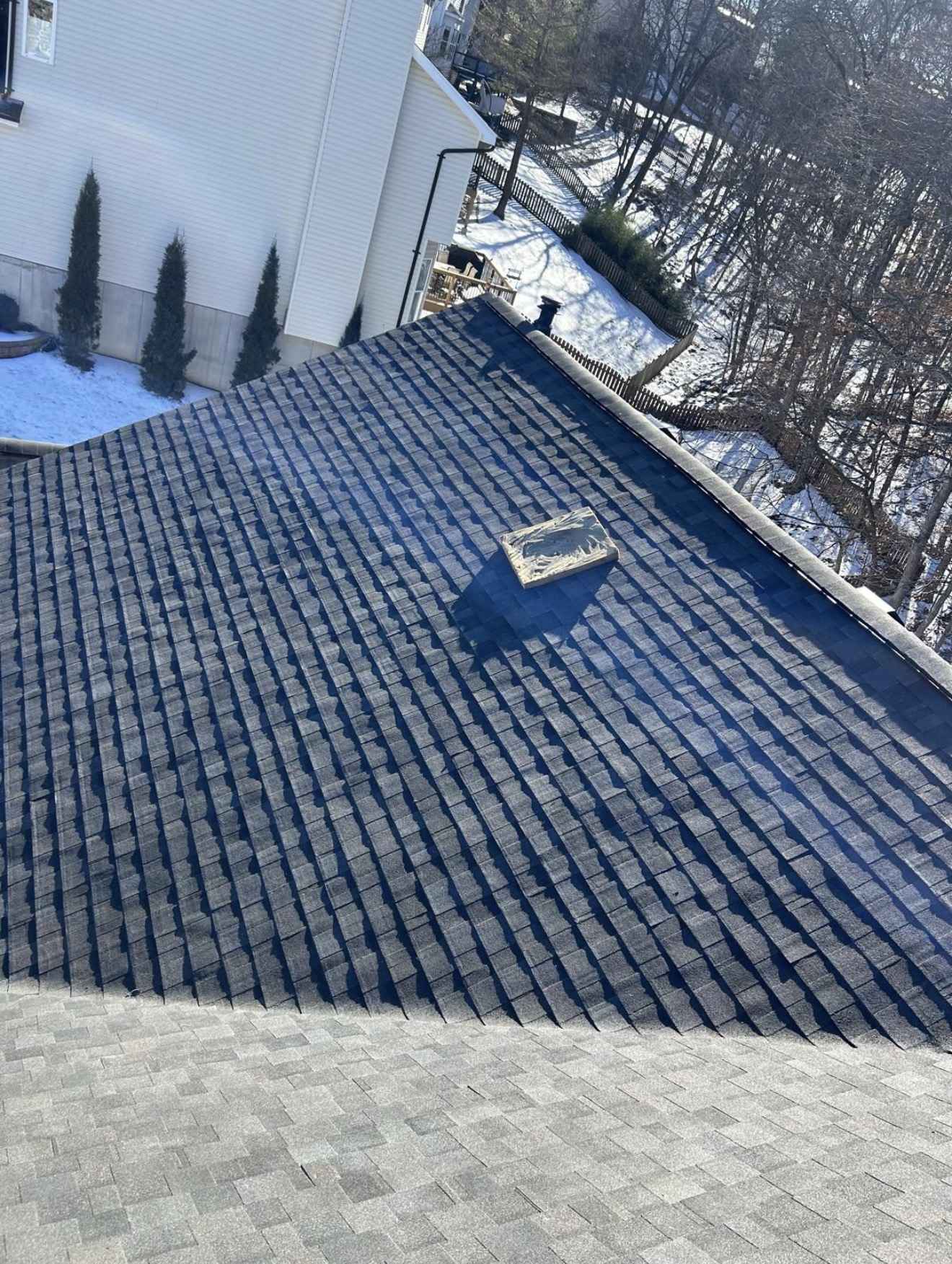
That is a feature on an open slope facing a garden and a hazard over a front door, a walk, a driveway, a gas meter or the roof of a lower addition. The fix is snow retention: bars or guards fixed to the seams, which on a standing seam roof can clamp to the raised seam without penetrating the panel at all. That last point matters and is a good test of an installer, because a snow guard screwed through the face of a standing seam panel undoes the main reason you bought the roof.
Decide this at quote stage. Retrofitting snow retention after somebody's shrubs get flattened is possible but it is a separate visit and a separate cost, and it is the item most often left out of a headline number.
Metal does not repeal ice dams
An ice dam forms when heat escaping from the house melts snow on the upper part of the roof, the water runs down to the cold overhang where there is no warm attic underneath it, and refreezes. The ridge of ice that builds up there backs water up under the roof covering.
That mechanism is about heat loss and ventilation, not about the material on top. A metal roof sheds snow more readily, which helps, and its continuous surface with self adhered membrane beneath is more tolerant of standing water than a shingle lap is, which also helps. Neither of those fixes an under-insulated attic with no intake ventilation at the eave.
Metal can also make one specific thing worse: a partial slide that stops at the cold eave and freezes there, forming an ice mass on the overhang. Which is another reason to think about snow retention placement rather than treating it as a bolt-on.
If ice damming is the problem you are trying to solve, the money is better spent on air sealing, insulation and getting the ventilation path working than on changing the roof surface. That is not a popular thing for a roofing site to say and it is still true.
The rain is not loud. The expansion is audible.
The barn roof reputation comes from exposed fastener panel screwed to open purlins with nothing underneath it and nothing above the rafters inside. That assembly is a drum. A residential standing seam roof is a different situation entirely: solid decking, underlayment, an attic cavity and insulation between the panel and the room. In practice people in the house usually report it as quieter than they expected, and comparable to a shingle roof.
Thermal movement is the real acoustic story. A long metal panel expands measurably between a winter night and a July afternoon, and if the clip system allows that movement as it should, the panel slides slightly against the clips. That can produce faint ticking or popping as the roof heats in the morning and cools in the evening. It is normal, it means the roof is doing what it is designed to do, and it is worth knowing about in advance rather than discovering it in month one.
Six things to ask a metal contractor, and the questions that are not for a roofer at all.